Fintech Trends 2026: Infrastructure Priorities for Banks
$1.38T market by 2034, 19.4% CAGR. RWA tokenization, embedded finance, AI. Vendor-agnostic priorities for 2026 execution.


$1.38T market by 2034, 19.4% CAGR. RWA tokenization, embedded finance, AI. Vendor-agnostic priorities for 2026 execution.

Subscribe now for best practices, research reports, and more.
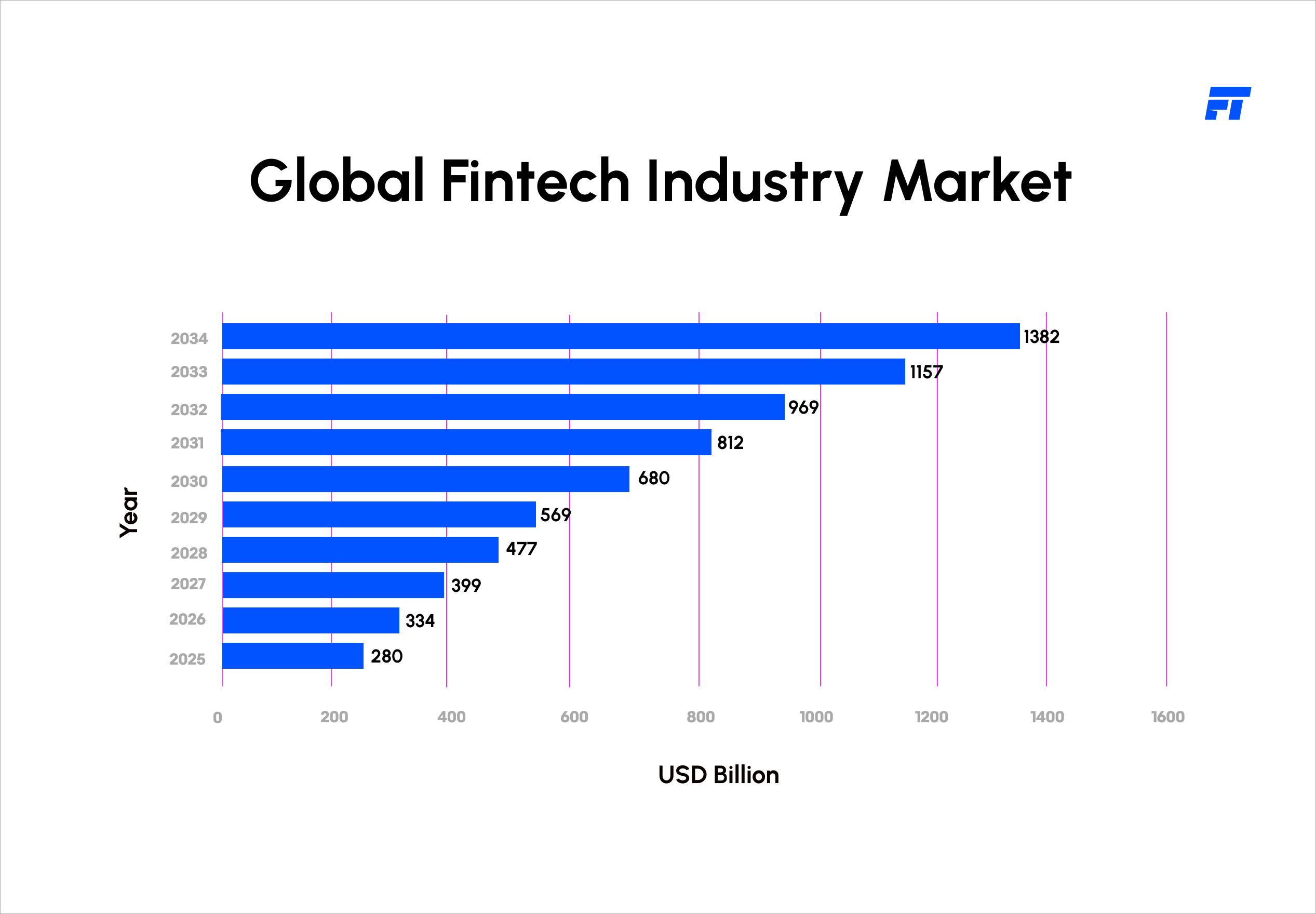
The Global Fintech Market grows from $234.6B in 2024 to $1.38T by 2034 at 19.4% CAGR.
For financial institutions, 2026 is not about watching trends. It is about executing infrastructure choices that determine competitive position for the next decade.
What institutions gain by acting now:
Credit decisioning shifts from rules-based to behaviour-based models using TabNet, LightGBM and CatBoost, with finance teams replacing static dashboards with AI copilots like FinGPT handling forecasting in seconds.
Next frontier: Autonomous finance agents integrate with SWIFT gpi, SEPA Instant and FedNow, shifting treasury operations from reactive to predictive.
Architecture requirement: AI-native stacks using AWS Bedrock or Azure OpenAI for serverless inference. Platforms like Arize and WhyLabs track model drift and decision traceability. Structured prompt orchestration is critical for reproducibility and auditing.
Regulatory reality: EU AI Act requires categorising AI use cases and implementing controls for high-risk systems. DORA emphasises operational resilience. MiCA focuses on crypto transparency. AI systems must explain decisions or fail compliance.
Takeaway: Select best-of-breed AI components through orchestration layers. Avoid single-vendor AI platforms controlling decision logic. Maintain model portability across cloud providers.
Take something physical like a Treasury bond or real estate and convert it to a digital token with embedded ownership rights and interest payouts, enabling fractional ownership of 0.01% in funds or buildings through digital wallets.
Market momentum: Franklin Templeton and UBS launched on-chain funds in 2025, with widespread asset manager adoption expected in fixed income and private credit.
Infrastructure: FinTech platforms embed blockchain rails invisibly, with custody and compliance handled through tools like Chainalysis KYT and Fireblocks. Regulators advance frameworks: EU extends DLT Pilot Regime, Singapore scales Project Guardian, U.S. reviews tokenized security classifications.
Strategic approach: Integrate multiple blockchain networks (Ethereum, Solana, Layer-2s) through orchestration. Avoid single-blockchain dependency. Support tokenized and traditional asset settlement simultaneously. Use multi-chain custody providers enabling network portability.
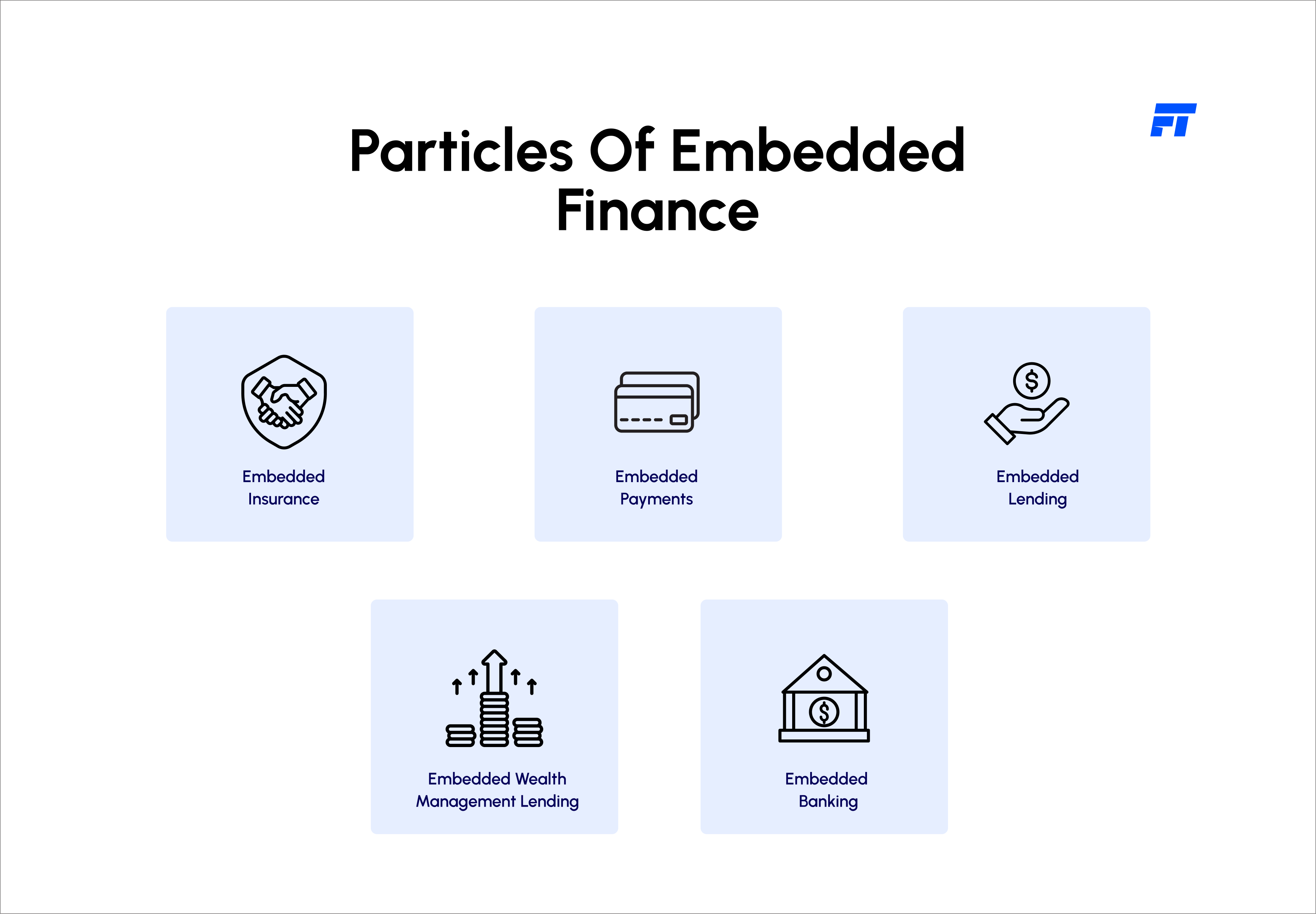
Finance embeds into platforms customers already use such as checkout pages, payroll software, CRMs and invoicing platforms, with revenue opportunity of 2-5% net income addition through API monetisation.
Challenge: OCC and FDIC crack down on sponsor bank relationships lacking oversight. Platforms embedding finance need deeper operational controls and clearer regulatory visibility.
Infrastructure: Modular BaaS, payment APIs and orchestration layers. API orchestration tools like Kong, Gravitee and Apigee manage access, tokens and latency. Data normalisation layers like Railz, Flinks and Codat integrate non-standardised financial data.
Strategic approach: Select BaaS providers based on composability, not vendor integration. Build compliance orchestration independently. Use multiple regulated partners for payments, KYC and compliance. Maintain own ledger or risk engine internally.
FedNow is live enabling 24/7 transfers with final settlement in seconds, SEPA Instant covers EU with euro transfers under 10 seconds, while India's UPI, Brazil's Pix and Singapore's FAST have already reshaped money movement.
Data standardisation: ISO 20022 sends structured, machine-readable data with every transaction. Banks build full ISO 20022 support across retail, treasury and FX rails.
Impact: Dynamic liquidity. No cutoff times. Instant cash positioning. Settlement speed no longer constrains product design. Tools like Moov, Dwolla and Volante emerge as real-time payment enablers.
Risk adaptation: Real-time risk engines and compliance processes operating at payment speed become mandatory. Fraud moves as fast as money.
Strategic approach: Support multiple real-time payment networks (FedNow, SEPA Instant, RTP, UPI) through unified orchestration API. Avoid lock-in to single rail providers. Build liquidity management engines independently.
.png)
Legacy systems are replaced by modular, cloud-native platforms like Mambu and Thought Machine, with lending tools like Amount and Lendflow enabling rapid credit product launches with embedded risk checks.
Why it matters: FinTechs move from tightly coupled stacks to best-of-breed components connected through orchestration. Rather than one provider for ledger, payments, compliance and KYC, companies select independently and connect modularly. This approach adapts faster to new markets, partners and regulations.
De-risking strategy: If BaaS provider loses sponsor bank or fails audit, it impacts entire ecosystem. Institutions spread critical systems across providers preventing single-point-of-failure. Cloud-native stacks built this way grow faster and stay compliant under pressure.
Strategic approach: Spread critical systems across multiple providers. Use one for payments, another for identity, build ledger or risk engine internally. Maintain modularity enabling rapid provider switching if needed.
AI reviews documents, monitors transactions and flags inconsistencies automatically, eliminating quarterly audit delays, with KYC/AML orchestration routing users through dynamic flows based on geography, risk level and behaviour.
Explainability mandatory: Tools like TruEra, Fiddler and Giskard audit ML systems and assign confidence scores providing human-readable justifications. DORA requires proof of handling disruptions and tracing every critical system end-to-end.
Compliance as software: CI/CD pipelines for compliance logic. Version-controlled policy updates. Integration testing for onboarding and monitoring flows.
Impact: 30-50% compliance cost reduction. Real-time risk detection versus delayed quarterly discovery. Operational resilience proof becomes competitive advantage.
Strategic approach: Select compliance monitoring platforms independently. Use multiple RegTech vendors for different functions. Build internal explainability frameworks rather than relying on provider systems. Maintain control of compliance data and audit trails.
Attackers utilise generative AI to scale phishing, spoof identities and deepfake KYC checks, requiring fraud detection that relies on real-time data streams, unsupervised machine learning and behavioural biometrics.
Continuous authentication: Tracking typing patterns, swipes, phone grip and mouse movement creates behavioural fingerprints almost impossible to fake. Even with correct credentials, mismatched behaviour triggers mid-session alerts.
Regulatory demand: DORA and NIS2 demand operational resilience and incident response capability. Visibility and controls must evolve as fast as threats.
Strategic approach: Implement continuous authentication independently from other providers. Use multiple fraud detection approaches (rule-based, ML, behavioural, device-based) through orchestration. Maintain portable identity data avoiding vendor-specific standards.
ESG and Green Finance: FinTechs weave ESG features directly into platforms with carbon trackers, ESG portfolios and climate offsets at checkout. APIs from Climatiq, ESG Book and Sustainalytics enable green bonds and automated ESG reporting. EU SFDR and SEC climate disclosure requirements make ESG integration mandatory.
Embedded Insurance: Insurance embeds in apps with parametric payouts triggered automatically by real-world data through smart contracts and oracles. Hyper-personalised policies use IoT devices feeding driving habits and health metrics into underwriting engines.
Continuous Identity: FinTechs move past static credentials into continuous authentication using behavioural biometrics, device fingerprinting and liveness checks. KYC evolves from one-time event to continuous, adaptive lifecycle process.
Fintech trends 2026 represent structural market shifts requiring deliberate infrastructure choices. RWA tokenization leads at 72.8% growth. Embedded finance follows at 36.4% CAGR. Real-time payments grow 42.2% YoY.
Institutions that build vendor-agnostic, composable, API-first cores in 2026 establish defensible competitive positions. Those dependent on single-vendor platforms risk margin compression as commoditisation accelerates.
Strategic execution hierarchy:
Institutions executing this hierarchy in 2026 capture fintech-driven growth. Those delaying will compete for legacy segments as fintech-native competitors consolidate network effects.
Ready to explore how Fyscal Technologies can help you achieve this?

















































.png)




















.svg)