Why Modern Payment Infrastructure Needs Multiple Rails
Relying on a single payment rail is a critical operational risk. Discover why multi-rail orchestration is essential for resilience, cost control, and agility.


Relying on a single payment rail is a critical operational risk. Discover why multi-rail orchestration is essential for resilience, cost control, and agility.

Subscribe now for best practices, research reports, and more.
The global payments landscape has entered a paradoxical era. For the end consumer, moving money has never been faster or simpler. Yet for the financial institutions facilitating these transactions, the backend infrastructure has never been more complex or fragile.
The era of relying on a single dominant network is over. We have entered what industry analysts call the 'Decoupled Era' of payments, where value no longer travels linearly. Instead, it moves across a fragmented matrix of real-time gross settlement systems, card networks, blockchain corridors, and regional instant payment schemes.
For C-Suite leaders and technical architects, this shift presents a stark choice. You can view this fragmentation as a chaotic operational burden, or you can leverage it as a strategic asset. The difference lies in orchestration.
Historically, banks built payment stacks around stability and predictability. A single robust connection to a primary clearing house or card network was often sufficient. Today, that singular dependency represents a critical point of failure.
Recent operational data paints a concerning picture. Industry reports indicate that API downtime in the financial sector increased by approximately 60% between early 2024 and 2025. When these digital arteries clog, the cost is immediate and severe. Estimates suggest that for enterprise-grade financial institutions, unplanned downtime can cost upwards of £230,000 per hour in lost revenue and operational overheads.
Beyond the immediate financial loss, there is the reputational blast radius. In a market where challengers offer instant settlements, a legacy bank suffering a four-hour outage during a peak transaction window risks permanent customer churn. Resilience is no longer just an IT metric; it is a core retention strategy.
Resilience is the defensive argument for a multi-rail strategy. The offensive argument is economic efficiency.
In a single-rail environment, an institution is a price taker. You pay the fees dictated by that network for every transaction, regardless of the context. In a multi-rail environment, you become a price chooser.
Consider a B2B platform processing high-volume international payouts. Sending a small remittance via traditional SWIFT channels might incur fees that erode the margin entirely. By integrating a multi-rail orchestration layer, the system can intelligently analyse the transaction in real time.
If speed is the priority, the system routes via the fastest available rail. If cost is the priority, it switches to a local automated clearing house (ACH) or a blockchain-based settlement corridor. This dynamic switching, often called least-cost routing, allows institutions to arbitrage between networks.
Data from 2024 suggests that intelligent routing can reduce payment processing costs by up to 40% for enterprises with significant cross-border volumes. This is not merely saving pennies on the pound; it is a structural improvement to the bottom line.
The challenge for most institutions is not understanding why they need multiple rails, but how to implement them without creating a tangle of technical debt.
The traditional approach involves building hard-coded integrations for each new scheme or provider. This results in a rigid 'spaghetti architecture' where updating one connection risks breaking others. It also binds the institution to the roadmaps of specific vendors.
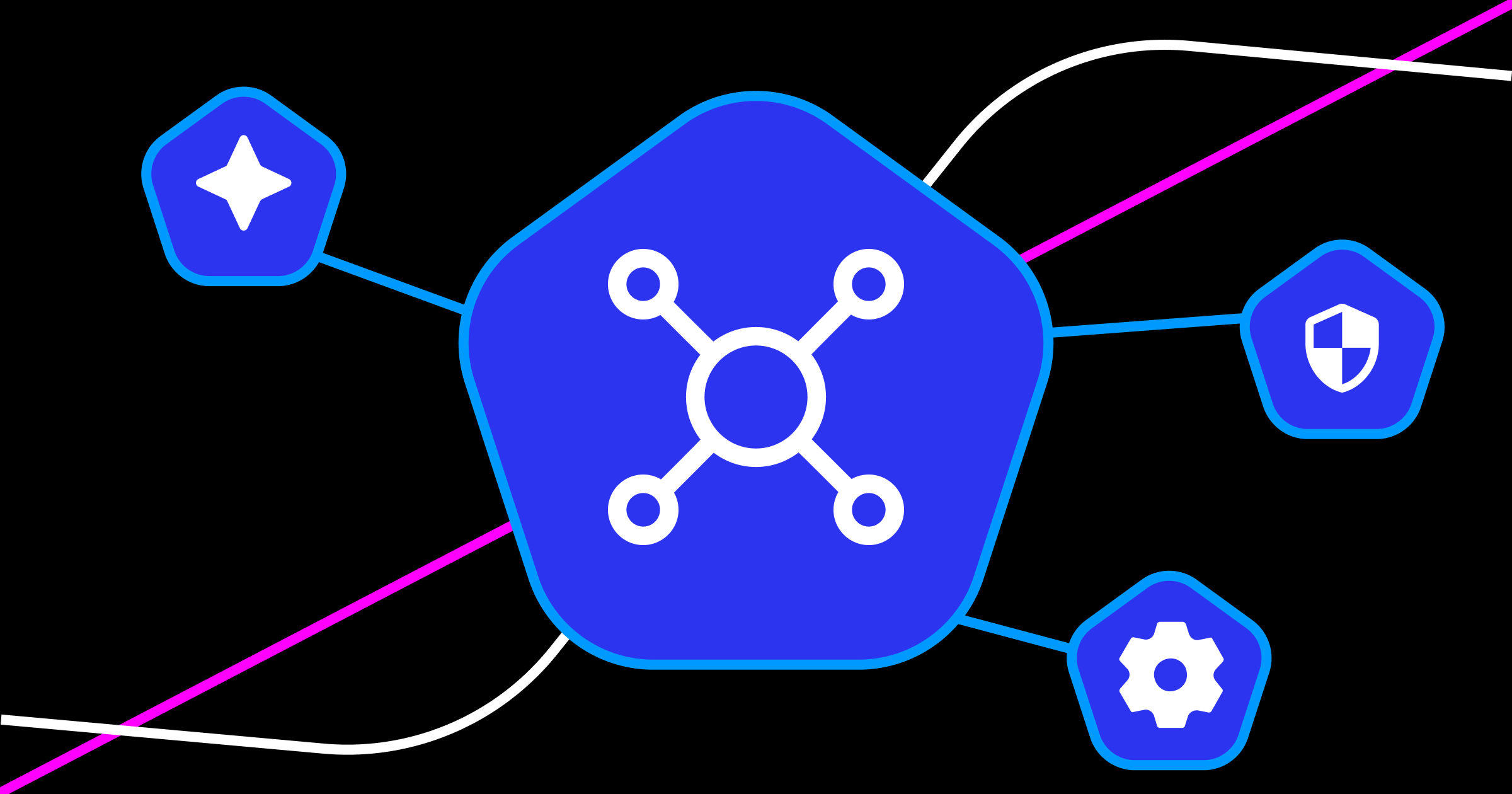
A superior strategic approach is vendor-agnostic execution. This involves building or buying an orchestration layer—a payment hub—that sits between your core banking system and the external networks.
This hub acts as a universal translator. It standardises data formats (such as ISO 20022) and manages the logic of which rail to use. Crucially, it decouples your core systems from external changes. If a new instant payment scheme launches in Southeast Asia, you connect it to the hub, not the core. If a provider changes their API, you update the hub, not the entire bank.
This architectural pattern delivers true agility. It transforms compliance from a reactive scramble into a programmable rule set. You can enforce region-specific data sovereignty rules or anti-money laundering checks at the orchestration level, ensuring compliance across all rails simultaneously.
.png)
Transitioning to a multi-rail infrastructure is a significant engineering undertaking, but the return on investment is quantifiable across multiple dimensions.
The convergence of real-time payments, open banking, and digital assets has created a complex ecosystem that no single rail can satisfy. The winning institutions of the next decade will not be those with the strongest loyalty to legacy networks. They will be the ones who can weave multiple networks into a seamless, invisible experience for the customer.
Fyscal Technologies helps financial institutions navigate this complexity. By prioritising vendor-agnostic architecture and intelligent orchestration, we enable you to build a payment infrastructure that is resilient by design and optimised for growth.
Ready to explore how Fyscal Technologies can help you achieve this?













































.png)


















.svg)